
Courreges














Courreges, the Legend of a Fashion Genius
Andre Courrages broke onto the fashion scene in the 1960s and transformed it forever with his bold and interesting fashion choices. Young people in particular responded to his work – hip-hugging pants, short boots, and his love of white fabric. He may have even been the inventor of the miniskirt, one of the most iconic fashion innovations of the latter half of the 20th century.
Bold New Directions
Andre Courreges studied to be a civil engineer, but decided to go a different direction when he was 25 years old. He studied fashion in Paris at the Jeanne Lafaurie design house, but soon he was working for the man known as The Master, Cristobal Balenciaga. He worked together with that great designer for ten years before striking out on his own.
The house of Courreges was established in 1961. At first, few took real notice of him. His designs were clearly heavily influenced by the work of his former employer, Balenciaga. But within a few years, people began to see the unique genius of Andre Courreges. His 1964 collection featured exquisitely cut pants, short skirts matched with white mid-calf boots, and other ultramodern items. It was so modern, some reviewers called it the “Space Age look”. The color white and sharp geometric shapes were a common theme.
Even the materials were something futuristic -- PVC, plastic, and metal, everything in stark primary colors, like red, or white, or yellow, or in a metal color like gold, silver, or chrome. Courreges became famous nearly overnight. The collection did not sell as well as it could, though. The older more mature women who tended to purchase fashion show clothing were not the type of women suited to wear the tight shorts, short skirts, and geometric shoulders he offered.
One of the secrets of Courreges’s success was the simplicity of his designs. Unfortunately, this meant that it was easy for other designers to copy from him and sell the resulting work to more receptive markets. In response, Courreges took firmer control of his production, offering his goods only to licensed outlets, including lines of ready-to-wear clothing.
He had no compunction about breaking with tradition, which caused more than a little controversy. Transparent tops, vinyl-trimmed suits, sparkling jumpers studded with sequins – his designs were often shocking to 60s sensibilities, but that also made him more famous.
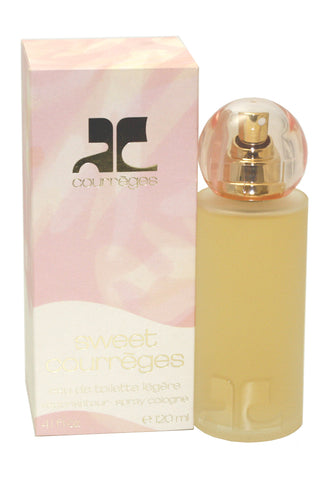
Courreges Fragrances
Courreges enter the world of fragrances in 1966 with the same approach he used with clothing – bold and modern, yet shockingly simple in concept.
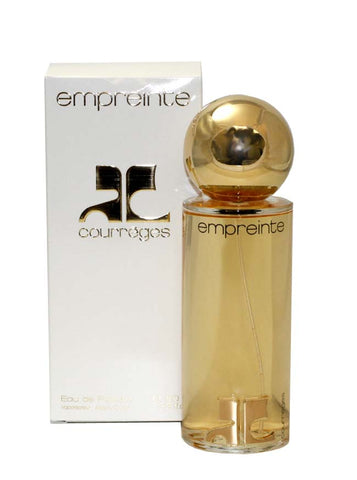
One of his first was called Empreinte (Footprint), launched in 1970. This floral and sensual scent is boldly feminine, exotic. It opens with coriander, peach, aldehyde, and artemisia; the heart is composed of jasmine, iris, melon, and rose; the trailing notes are oak moss, amber, castoreum, cedar, and patchouli.
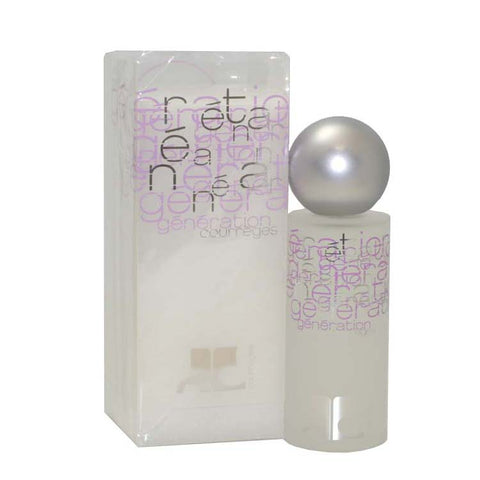
Generation is a sweetly delicious composition of fruits and flowers. It sparkles with opening notes of raspberry, peach, and black current; the heart is made from carnation, rose, jasmine, violet leaf, and lilac; the drydown notes are oakmoss, sandalwood, and musk, touched with the sweetness of honey.
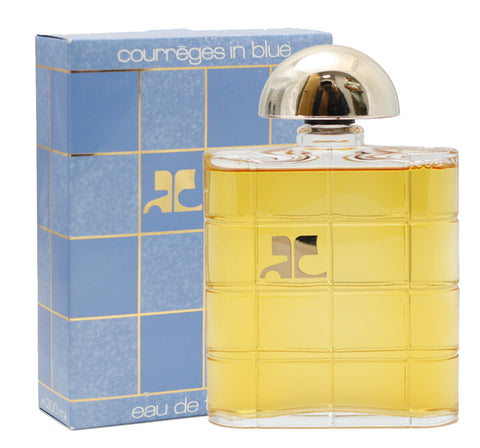
Courreges in Blue is an invigorating composition, a powerful symphony of scents for women that will stir and excite. It is one of the newest creations of the house of Courreges, launched in 2013. It starts out boldly with ginger, galbanum, and aldehydes; fading back into luxurious floral middle notes of jasmine, Turkish rose, and chamomile; the base notes are composed of oakmoss, sandalwood and patchouli.
Endless Innovation
There seemed to be no end to the creativity of Andre Courreges. He kept inventing new designs like swimsuits held together by only thin strings on the sides – something still seen today. Others were passing fads, like sweater pants, or jersey dresses made from material that glows in the dark. Whatever he made, other designers were quick to copy, until it seemed everyone was wearing plastic clothing with geometric angles, all in stark primary colors, accessoried with dark goggles and white boots.
Courreges took inspiration from many places – the ever-changing technology of the modern age, contemporary architecture, and the newest trends in the world of art and design. Others followed the same inspirations, like Mary Quant or Coco Chanel, but it was Courreges who pushed these ideas to the limit, making designs that could have come from the mind of no one else.